
AI as an Editorial Value Driver
At the Rencontres éditoriales conference on 5 February, Marcela Kunova, CEO of Journalism.co.uk, outlined a clear picture: innovation in UK media is advancing on two complementary fronts. On one side, a new wave of independent publishers building robust, lean models. On the other, editorial teams deploying AI not as a cost-cutting tool, but as a product that deepens reader value.
Two case studies stand out.
Nursing Times, a specialist media brand serving nursing professionals, launched Ask Nursing Times — an AI-powered internal search engine developed in partnership with Miso.ai. Crucially, the system operates as a closed model: the AI draws exclusively from the publication’s proprietary content archive, not the open web.
The strategic intent is clear. This is not a technology play — it is an audience retention and conversion play. The tool delivers fast, contextualised answers to a highly demanding professional readership. Unlimited access is gated behind a subscription. The outcome: over 200 new subscriptions generated directly through the tool. In a niche B2B market, that is a meaningful conversion metric.
Construction News took a similar logic further with Construction News Intelligence, a data product targeting professionals in the built environment sector. The platform aggregates public data — tenders, government announcements, procurement signals — and uses AI to collect, organise and update the information in real time, linking it to the publication’s own editorial analysis.
The result is a decision-support tool, not merely a content feed. According to figures shared at the conference, AI reduced development costs by 90% compared to a traditional build, and the product has generated over 100,000 premium subscriptions.
This positioning fits a broader trend. While general-interest audiences remain reluctant to pay for news, premium specialist media are accelerating. In 2025, The Economist reported 1.25 million subscribers — up 3% — with 85% of new sign-ups coming via digital channels.
What these models share is not the technology itself, but the capacity to extend editorial expertise beyond the article. Premium audiences are no longer looking for information alone — they want structured intelligence. And AI, when deployed with editorial intent, can deliver exactly that.
Journalists vs. Content Creators: A Blurring Boundary
Alongside these product innovations, a new generation of independent media is emerging — built by experienced journalists who have stepped away from traditional structures.
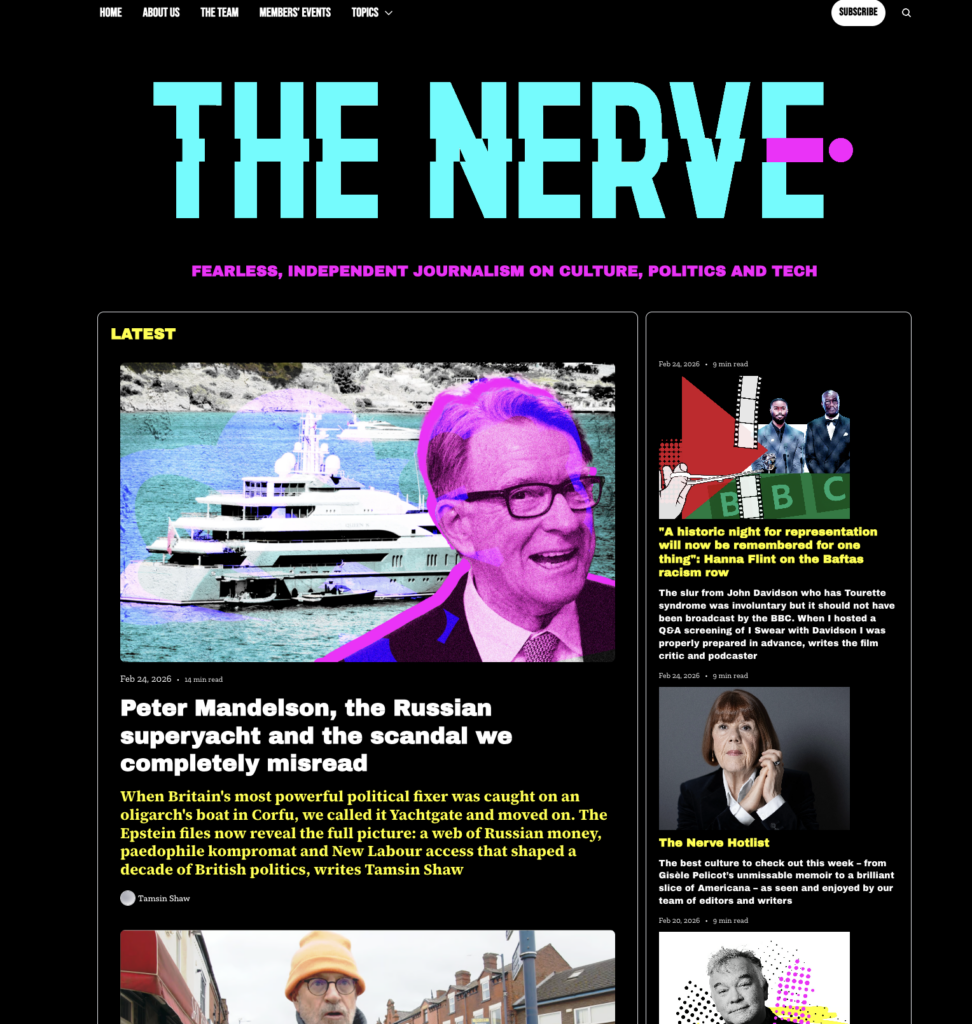
The Nerve, launched by former journalists from The Observer, is a compelling example. The model is built around a newsletter, a distinctive editorial voice and a direct relationship with a community of readers. The ambition is not mass reach, but a loyal, engaged readership willing to financially support the project.
This dynamic reflects the broader creator economy logic: seasoned journalists are building their own media brands around their expertise — positioning themselves as editorial entrepreneurs as much as reporters.
Going All-In on Platforms
In January 2026, the BBC announced a strategic partnership with YouTube — a significant shift for one of the world’s most respected public broadcasters.
The agreement spans four key dimensions:
- YouTube-first content: The BBC will produce original programmes designed specifically for digital audiences — particularly younger viewers — rather than repurposing TV broadcast material.
- Specialist channel expansion: The strategy includes the launch of around 50 dedicated YouTube channels covering documentaries, news, entertainment, children’s content and sport.
- Simultaneous release: New programmes will launch on YouTube and BBC digital services — including BBC iPlayer and BBC Sounds — at the same time.
- Live formats and editorial innovation: Real-time news streams and new narrative formats are planned to drive deeper engagement.
With YouTube reaching 52 million UK users, according to platform data, this goes well beyond a distribution exercise. As the BBC’s Director-General stated, the partnership is designed to help the broadcaster connect with audiences in new ways and extend the cultural reach of its content beyond traditional channels
The Rise of the Journalist-Influencer
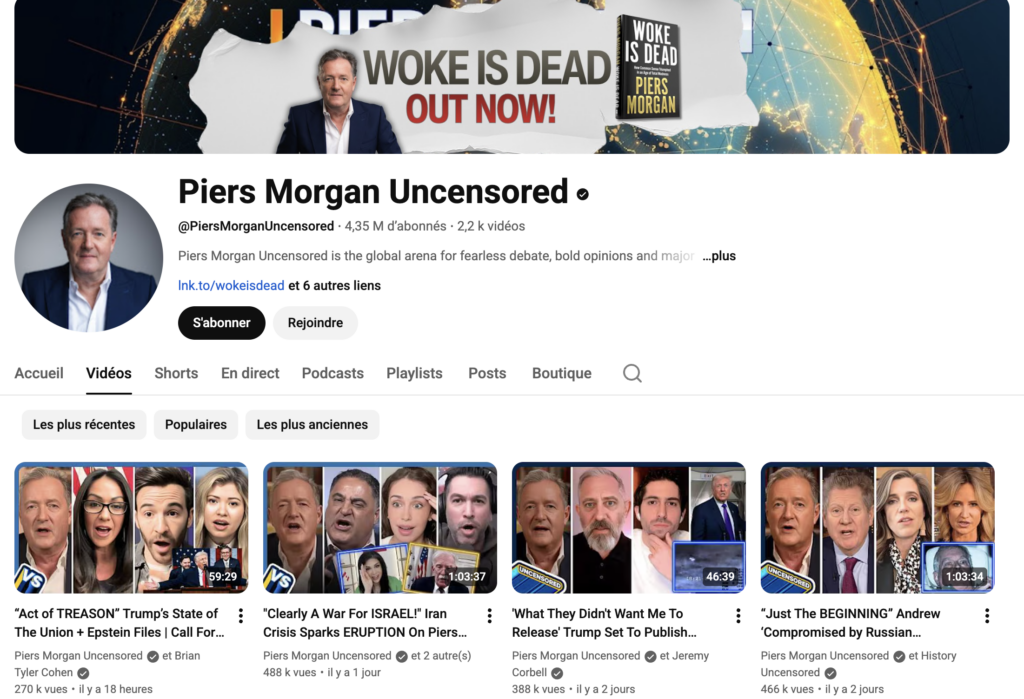
Piers Morgan illustrates something bigger than his own career reinvention. In 2024, he made a full pivot to digital with Piers Morgan Uncensored on YouTube, reportedly generat
ing £17 million in revenue that year.Beyond the figures, the signal is what matters. News is no longer consumed exclusively through television or legacy media websites. Video platforms have become primary news environments in their own right.
Morgan’s model demonstrates that today a journalist can build a sustainable, high-revenue media operation with no broadcaster or editorial institution behind them. Audience, consistency and personal brand are the foundations.
As the Reuters Institute noted in its Trends & Predictions 2026 report, journalists are increasingly aligning with creator codes: strong personal presence, direct community ownership and native platform distribution.
Reinventing Legacy Media
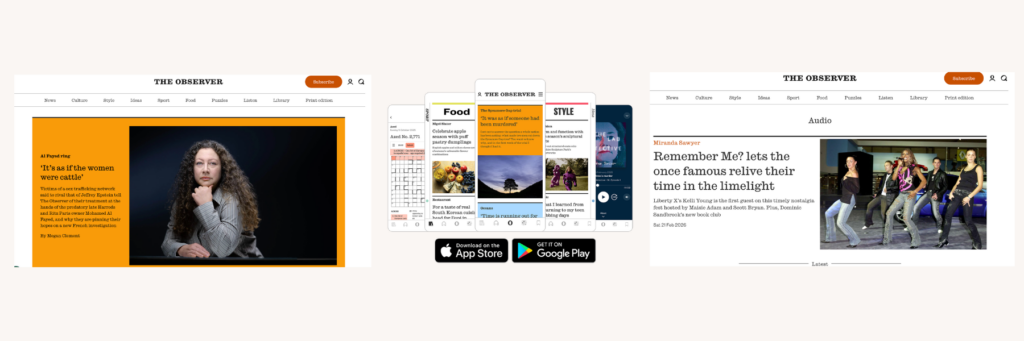
The acquisition of The Observer by Tortoise Media points to yet another model. Tortoise’s stated positioning moves deliberately away from breaking news, in favour of analysis, context and explanation. The format combines a premium print edition with a website, an app, and audio and video formats.
Here, innovation is not technological — it is editorial. Less volume, more substance. Less immediacy, more depth.
What Emerges
Across these examples, a clear trajectory takes shape. AI is being used to amplify expertise, not replace it. Experienced journalists are building independent structures where traditional models are failing. Legacy media are choosing to partner with platforms rather than resist them. And value is migrating towards engaged communities — not passive audiences.
Want to adapt your editorial strategy to these innovation?
Our team works with communication and marketing leaders at international companies to build content strategies that perform.
Speak to our experts