Where did the idea for Parlons Épargne come from?
Lisa Paquereau: Ofi Invest Asset Management was formed by merging two entities: Ofi Asset Management, the asset manager owned by Macif, and Abeille Asset Management, the former asset management arm of insurer Abeille Assurances. The merger closed in 2022, in under nine months. A timeline that forced us to move fast on building the brand.
Over time, one thing became clear: we serve three client types with radically different needs. Institutional investors first – CFOs and investment directors at pension funds and mutual insurers, who expect technical, precise communication. Distributors next – financial advisers from banking networks, insurance networks or independent practices, whose financial knowledge varies enormously. And, through our partner networks, retail savers, who need a much more educational approach.
The second thing we noticed: the same two channels, a LinkedIn account and a website, were trying to serve all three audiences at once.
We first considered launching a new retail-facing brand, but adding another brand to an already complex group risked diluting the message. Instead, we built a channel dedicated to distributors, to share our expertise and build their competence and confidence.
What ambitions did you have for the platform?
L.P.: Our starting conviction was simple: supporting our distributors well means giving them the tools to understand what they’re selling. An adviser who understands their product sells it accurately to their client — a virtuous circle that benefits both the saver and the adviser, bound by genuine trust. I specifically didn’t want to replicate what other asset managers already do: standard training modules. What I had in mind was closer to a financial culture quiz, like a board game, with categories on geography, financial instruments, general knowledge and key figures. In short, we wanted accessible, entertaining content — snackable pieces that interest, entertain and inform at once.
How did the project come together?
L.P.: We spent six to eight months laying the groundwork: defining the visual identity, testing formats and concepts. Most of that work happened in-house, but for the more ambitious formats, video in particular, we needed an editorial partner. That’s where The Editorialist came in, through many rounds of back-and-forth until we found the right tone.
One concept emerged quickly: our distributors need real stories — about entrepreneurs, about companies — to give their advice meaning. One rule shaped everything: never feature a company held in our portfolios, to avoid any perception of steering the market. That constraint gave rise to Stock Story, a format tracing the history of companies we don’t hold: their milestones, the decisions that mattered, the crises they weathered or the wins they had, distilled into lessons useful to our advisers.
Nos Futurs takes a different angle: mapping the major sector trends ahead — in energy, infrastructure, health or metals — to help our distributors understand sustainability challenges and the opportunities within them.
Other regular formats rounded out the hub: 60 secondes éco, a one-minute rundown of economic news; Culture Invest, which unpacks financial history and mechanisms; and Paroles d’experts and Regards croisés, which bring different viewpoints together. All of it now lives on a single platform, parlonsepargne.com.
How would you sum up Parlons Épargne in one sentence?
L.P.: A financial culture hub for savings professionals. A hub, because the platform brings together content at different levels of expertise, in different formats. Financial culture, because it’s as much about technique as it is about knowledge and context. And for savings professionals, because helping them understand better means helping them sell better — and, in their own way, contribute to more responsible finance.
Why several formats rather than one editorial series?
L.P.: Our audiences consume editorial content differently: some prefer reading, others listening, others watching. Mixing formats — carousels, video, podcasts — lets us meet all three habits. What doesn’t change, whatever the format, is the bar: editorial rigour, factual accuracy, financial expertise.
We also pushed to avoid the obvious choices. Two examples stand out. A carousel published on Halloween, about Elizabeth “Betty” Green, known as the Witch of Wall Street: internally, many worried the tone was too playful for our sector, yet it became one of our best-performing pieces by engagement.
Then there’s the podcast I host with asset managers, “Dans la tête d’un gérant” (“Inside a fund manager’s head”), which shows the person behind the job: managing stress, making decisions when millions are on the line. Nothing like it existed in our sector before, and the feedback has been strongly positive.
What was the biggest challenge in building Parlons Épargne?
L.P.: First, getting internal buy-in. That took time. I presented the project to the management committee, the executive committee, the board — the challenge being to help them picture a concept that was still abstract.
Another challenge was the shift in posture a format like this demands. Getting our leadership comfortable with a more creative tone, at times unexpected for our sector, took conviction and evidence. The results from our first content pieces settled most of the doubts quickly.
Over the longer run, I stay wary of the blank-page problem. From day one, I’ve kept three to four months of content produced in advance — a condition for holding the pace over time.
How do you measure content performance?
L.P.: Today, the first thing we look at isn’t follower count, it’s follower quality. Close to 80% of our LinkedIn followers sit squarely within our target audience: financial advisers, wealth managers, insurance agents. That was the metric that mattered most to us, because it would have been easy to rack up followers with no real interest in the subject.
Within a few months, we passed close to 3,000 followers, and our target of 1,000 new followers for the year was hit in six months, by summer, with growth that was largely organic. On the website, it’s still too early to draw firm conclusions, the platform is too new. We’re only starting to see which content gets the most traffic. In parallel, our sales teams feed back, from their conversations with advisers on the ground, which topics generate the most reaction.
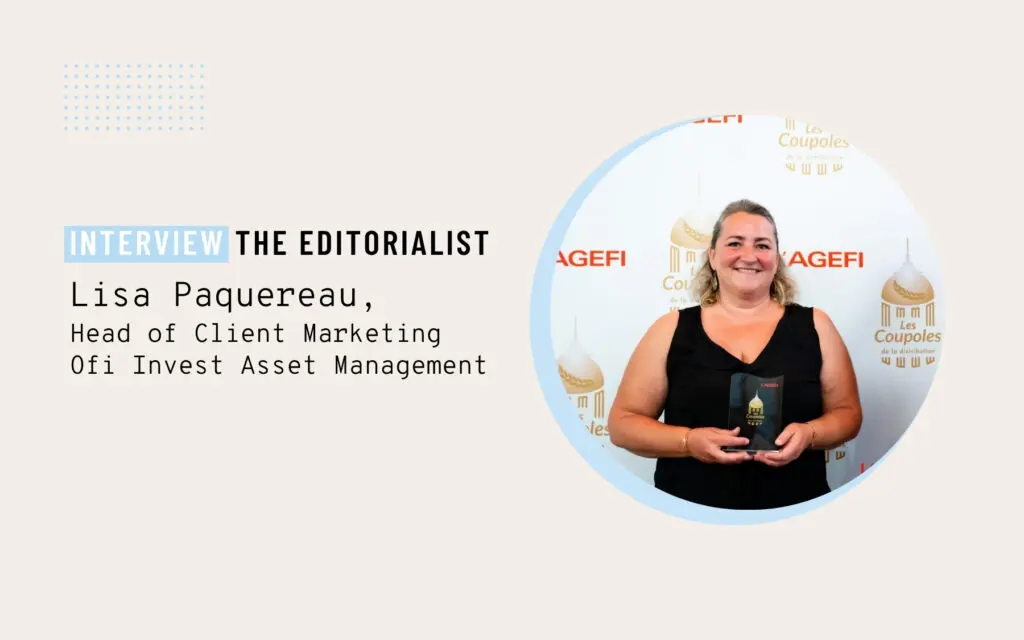
In June 2026, Parlons Épargne won the Coupole de l’Audace, awarded by Agefi. What does that recognition mean to you?
L.P.: This outside recognition validates work the team put in with real commitment over several months. Coming from a leading specialist publication, the award gives our efforts legitimacy and, internally, helps show how far we’ve come.
Where do you see Parlons Épargne going next?
L.P.: Our priorities sit along two lines. One is building visibility with a wider audience, beyond LinkedIn and beyond the major cities — through campaigns to drive direct traffic to parlonsepargne.com, alongside our Spotify and YouTube channels.
The other is expanding training, with modules on the basics of finance, ESG and asset allocation, from beginner to expert level. We’ve partnered with an accredited body, so these modules will count towards the continuing education hours advisers need to keep their sales accreditation.
We’re also exploring a new topic with Macif: prevention through a gender lens — working against stereotypes to help financial advisers better support their male and female clients alike.
On the organisational side, a team fully dedicated to Parlons Épargne would be a natural next step. It’s under discussion with leadership as part of the 2027–2030 development plan.