1. A clear editorial focus is more powerful than a multitude of messages
S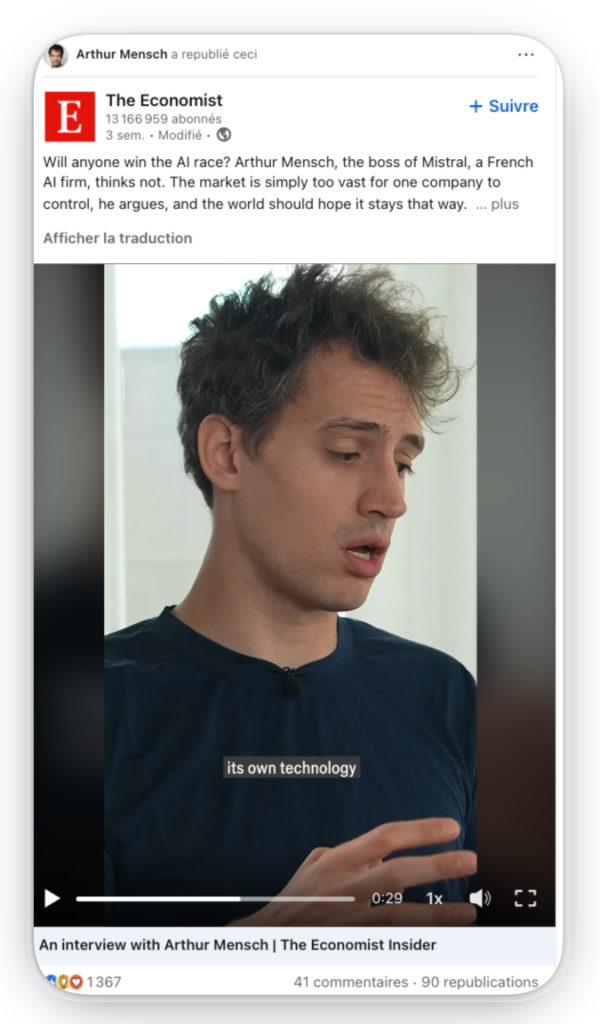 overeignty is central to the way European cloud providers communicate. But now that so many companies claim it as a priority, sovereignty alone is no longer a differentiator. The angle a company takes becomes decisive.
Mistral AI frames sovereignty largely in terms of ownership and control. The words ‘own’ and ‘control’ recur throughout its content, emphasising the ability to retain control over models, data and the environments in which they run. Arthur Mensch addresses the political dimension more directly, advocating for Europe’s ability to develop and control its own AI technologies.
NVIDIA offers another useful example. Over the past year or so, Jensen Huang has become more active on LinkedIn, having previously relied more heavily on keynotes and media appearances for his public profile. This shift reflects a broadening of NVIDIA’s corporate narrative. By discussing ‘AI factories’ and the production of Blackwell chips in the United States, he positions AI within a wider narrative of reindustrialisation.
LinkedIn allows him to share this vision more regularly between major announcements and events. Rather than simply sharing company news, he helps establish the themes NVIDIA wants to be associated with.
This is where a Leader Advocacy strategy comes into its own: empowering executives and experts to articulate the company’s positioning through their own perspectives and authentic voices. Their contributions can reinforce the corporate narrative while giving greater visibility to the company’s convictions.
2. Proof matters more than promises
Claims about innovation or performance can only go so far when they rely solely on a company’s own assertions. Some companies therefore put results front and centre, particularly through data storytelling: using data to substantiate their claims rather than simply making them.
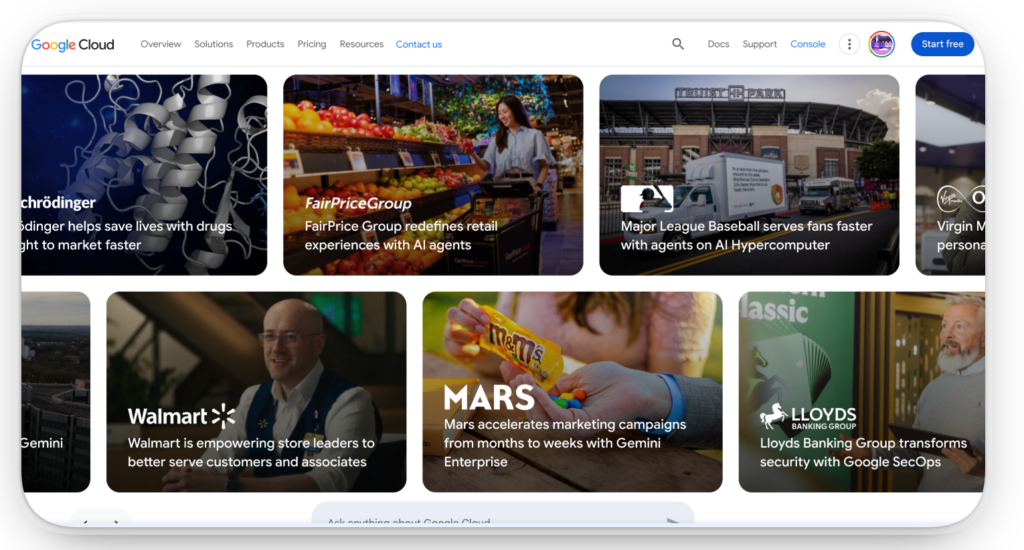
Google Cloud does this in its customer stories section. Before going into the details of each project, it highlights the outcomes: a 46% reduction in operating costs at Vodafone, $150m in annualised savings at Sabre and a 50% cost reduction at Recursion. Evidence becomes the starting point of the story rather than a secondary detail.
IONOS takes a different approach, conducting its own research into how small and medium-sized enterprises (SMEs) use digital technologies. This gives the company original data to support its commentary on the issues it wants to address.
Evidence can also be repurposed across channels. A result can become a LinkedIn hook, a study can inspire several stories and a customer testimonial can provide the basis for an interview. Evidence also helps content gain visibility in search engines and, increasingly, in AI-generated answers. With the rise of GEO, precise content backed by identifiable sources is better placed to be understood and cited by AI-powered answer engines.
3. Leading companies create recurring content formats
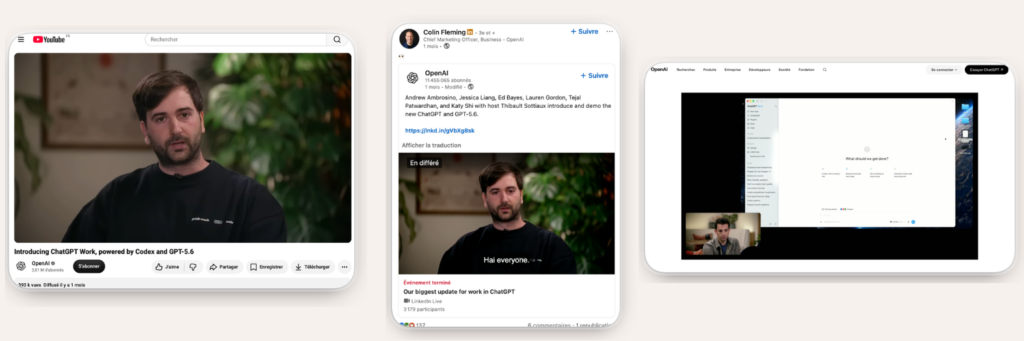
OpenAI has gradually made livestreams a hallmark of its product launches. GPT-5, ChatGPT Images 2.0 and, more recently, GPT-Live were among the products introduced in live broadcasts, subsequently available to watch on YouTube, LinkedIn and the company’s website. Users can also sign up for notifications ahead of the next broadcast. Each launch becomes a recognisable event in the company’s communications calendar.
Scaleway takes a different approach with ai-PULSE, its annual AI event. In 2025, it brought together more than 2,000 attendees and over 70 experts. The event generated enough material to keep the conversation going afterwards through content published on the company’s blog, LinkedIn and YouTube.
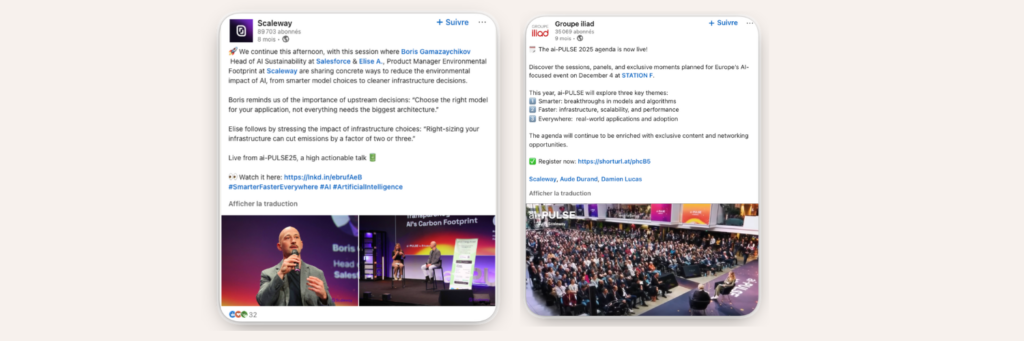
The impact of a key moment can extend far beyond the day itself. A talk can become a social media post, a keynote an article and a demonstration a video. This approach keeps multiple channels active around a consistent set of themes while creating recurring touchpoints that audiences come to recognise.
4. Different audiences need different content
IONOS and S3NS illustrate two very different approaches to communicating about complex technologies.
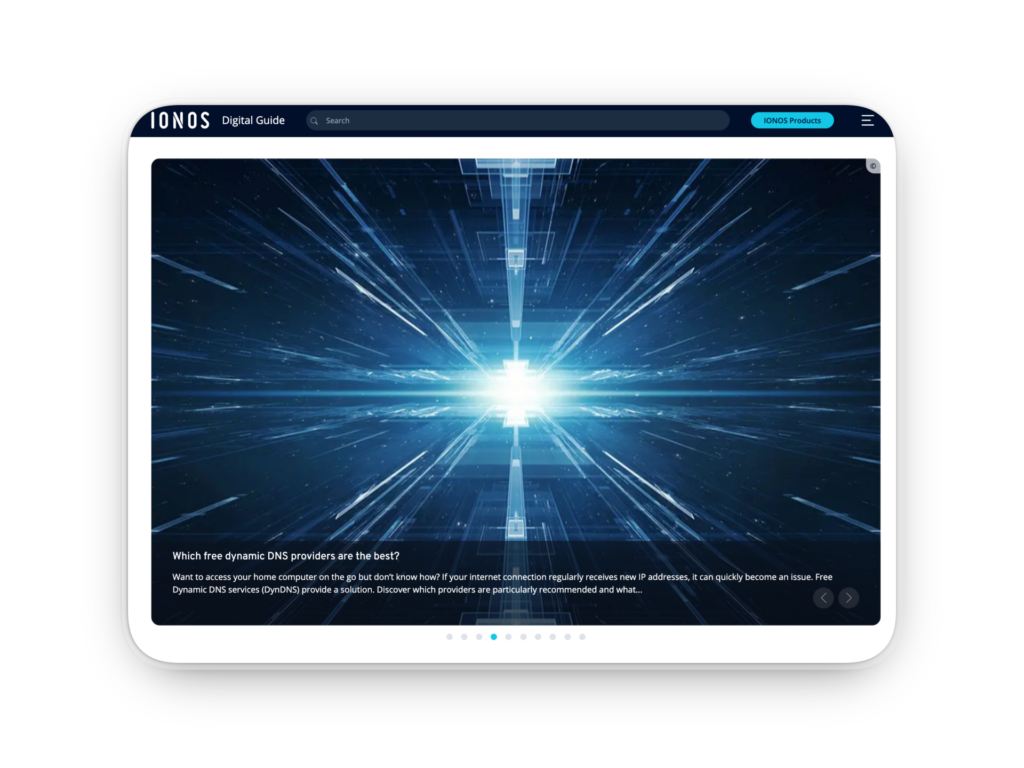
IONOS primarily targets SMEs. Its Digital Guide offers practical content on cloud and AI without assuming prior technical expertise. The focus is on the business applications of AI rather than the race to develop new technologies.
S3NS focuses more on decision-makers in regulated organisations. Its messaging is tailored to sectors such as banking, healthcare, defence and the public sector. This segmentation extends to its Summit, which features industry-specific tracks.
The target audience directly shapes the angle of the content. An SME leader looking to understand what AI could mean for their business needs different information from a CIO navigating compliance requirements. Both audiences may be reached through the same channel, including LinkedIn, but that does not mean they need the same content.
5. Consistency matters more than volume
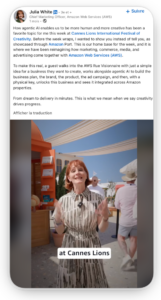
Expanding into more channels creates more opportunities to communicate. It also increases the risk of each channel telling a different story.
At Cannes Lions 2026, for instance, AWS CMO Julia White used LinkedIn to introduce Amazon Port. The experience invited visitors to start with a business idea and use agentic AI to develop a business plan, a brand and even a campaign. Her post was a direct extension of the on-site experience: rather than making another general statement about AI, it demonstrated what the technology could do.
This consistency allows channels to reinforce one another. An event provides material for social media, an executive’s perspective reinforces the corporate narrative, and in-depth content provides the evidence to support it.
Frequency matters less than the ability to maintain a consistent narrative. Publishing frequently achieves little if audiences cannot tell what the company stands for.
Finding a distinctive voice in a crowded market
As more companies address AI, sovereignty and security, differentiation increasingly depends on how they explore these issues and substantiate their claims. This goes beyond brand communications: with the rise of GEO and AI-powered answer engines, the quality and precision of content also shape its visibility. A strong editorial strategy must therefore build credibility and authority among its audiences while producing information robust enough to be found, understood and potentially cited by these new engines.
Key takeaways:
- Define clear areas of editorial focus rather than trying to comment on every market trend.
- Back up claims with evidence through data, case studies or identifiable sources of expertise.
- Develop recurring content formats that can sustain activity across multiple channels over time.
- Turn executives and experts into genuine editorial voices. LinkedIn plays an important role in Leader Advocacy strategies, giving these voices a platform to communicate the company’s convictions regularly.
- Build SEO and GEO into the content production process from the outset to maintain visibility as search behaviour evolves.
The Editorialist helps companies develop distinctive corporate narratives and bring their expertise to life through thought leadership and Leader Advocacy strategies.