Europe is rich.
With a combined GDP north of €20 trillion, the European Union is one of the world’s largest economic blocs, right up there with the United States and China. From a content marketer’s perspective, it’s a continent that is seemingly ready to buy what you’re selling.
But Europe is messy.
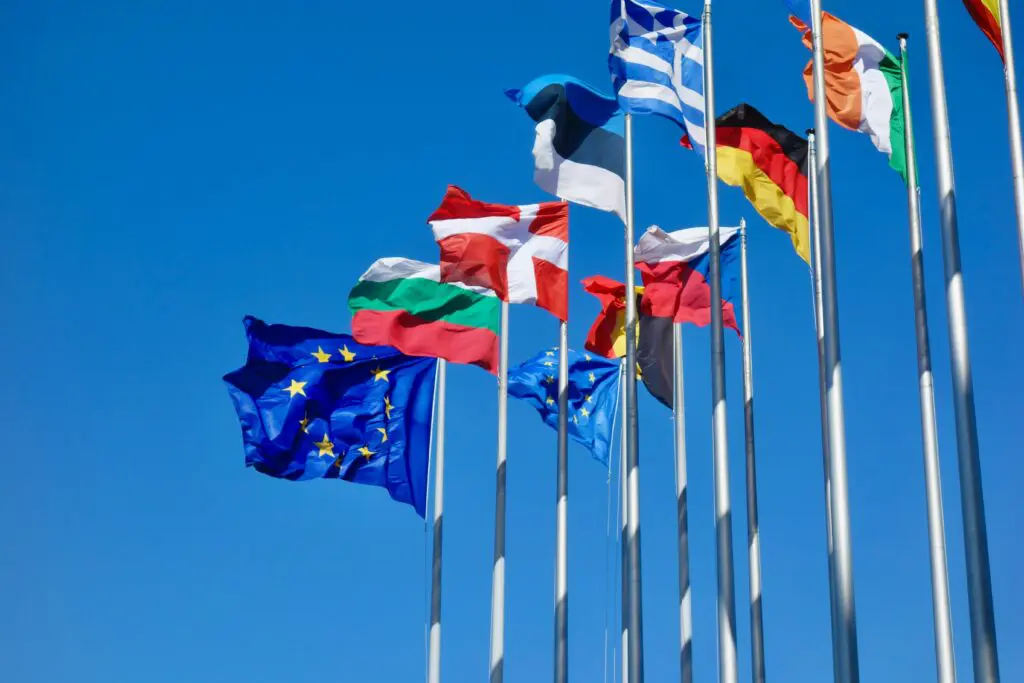
Roughly 450 million people speak 24 official languages across the amorphous boundaries of its 27 member states. Each of those nations has its own regulatory regimes layered under EU-wide rules. The continent’s media landscapes can also be stubbornly local, from market to market.
Scaling up a business for the entirety of Europe might seem like a daunting task, but the benefits of success within this large playing field are worth the effort.
McKinsey’s State of Marketing Europe 2026 surveyed 500 senior marketing leaders from five major European countries. It found that brand building ranked as marketers’ top priority. In the report, Schneider Electric CMO Richella Odebrecht stated that only 5% of buyers are actively shopping at any given moment, yet 80% already have a preferred vendor in mind before they start researching. She believes that brand presence has to be built prior to demand, because that will decide which company is getting shortlisted — whether in one country or 27.
French health insurer Alan is a good example of a company that is seeing success by building a clear brand identity. Launched in 2016 as the first newly licensed independent health insurer in France in decades, Alan positioned itself as a health partner rather than a traditional third-party provider. Leveraging its strong identity, it chose not to build up a full local sales and marketing operation in other markets, instead deciding to quickly expand into Belgium and Spain. The company recently brought in a dedicated creative and brand lead, tasked explicitly with carrying that same coherence through every market it’s now in.
Another example: Danish energy company Ørsted. Formerly known as DONG Energy, it rebuilt its entire brand (including its name) around the story of shifting from one of Europe’s most coal-intensive utilities to a global leader in offshore wind. Far beyond a simple logo refresh, this new story became the platform for a decade of sustained thought leadership on the energy transition, aimed at investors, regulators and customers across every market the company operates in.
Alan and Ørsted couldn’t be more different on paper, but each made the same conscious decision to favour content and positioning to drive European growth. This represents a big turn away from conventional marketing wisdom that made discretionary spend the top priority.
How audience intelligence supports brand building
Companies like Alan and Ørsted are European success stories because they did their homework: they researched their various markets to figure out what would actually garner attention in each. By conducting audience intelligence research, businesses take the guesswork out of what might work in one sector or region, and not another. Look at it this way: a CFO in Frankfurt, a marketing director in Milan and a comms lead in Warsaw aren’t going to read the same story for the same reason, even inside the same industry. There is a difference between “we translated the same three blog posts into 24 languages” and “we know what resonates in each market, and we’re only producing what gets attention there.”
From there, content marketing reaches people at scale without a linear cost curve. It first hits your own community, then a wider qualified audience. And as audiences increasingly use AI engines as their first stop in a search, they’ll find you before they even see your website. This is where The Editorialist newsroom comes into play, with offices in Paris and London, 300-plus journalists and content producers writing natively on Italy, Spain, Germany and every other market in between. The Editorialist reaches more than 20 million qualified decision-makers a year, without the need to translate a single template for each market.
There is another advantage to doing it this way instead of translating a one-size-fits-all message. By pitching a story natively to a German trade press — in German, by someone who understands the German market — the story will have a much greater impact than a French press release that was simply translated into German. Each well-structured, targeted piece, when tied to a consistent set of facts, extends its reach because it will get picked up by AI engines, which will start citing it when anyone in any of those 27 markets asks a question that your brand can answer.
A solid platform with legs
The one thing that must hold constant across all of this is the platform that none of your audiences see directly: the positioning itself. The underlying brand platform has to be built to travel. This means that the message is coherent enough to be easily translated into 24 languages, and it has to be structured so an AI model can summarise it accurately, regardless of which market’s version it encountered first.
European fragmentation is, in fact, only a problem if you try building your business without these tools. The right audience intelligence, a brand platform with legs, and content structured for both human readers and AI engines give you the advantage over competitors who get lost trying to navigate the continent without them. Europe is composed of enough distinct audiences to make targeting worth the effort, inside a market rich enough to make it worth doing properly.
Get started with an audit of what you actually know about your priority markets and audiences today, against what your content and coverage currently say about you there.
The Editorialist helps you run an audit, mapping what your priority markets already know about your brand against what your content and coverage actually say about it today.
Talk to our experts